Certificate of Free Sale (CFS)
Dietary supplements, medical foods and foods for special dietary use.
Uruguay has accepted apostilles since 14 October 2012. An FDA export certificate for a registration in Montevideo needs a single U.S. Department of State apostille, with no Uruguayan consulate legalization. Upload the digital certificate and we return it apostilled by FedEx.
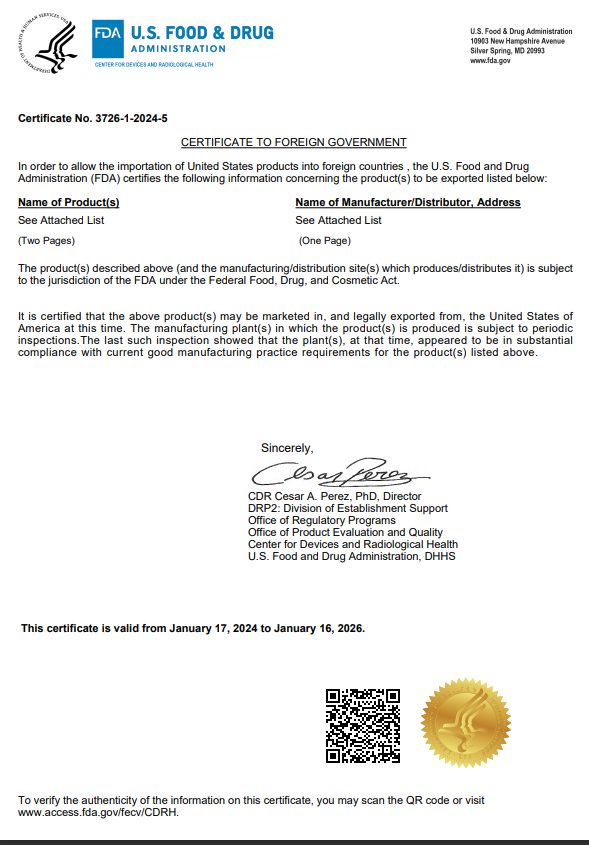
Simply upload your FDA digital file, and you will receive your apostilled document via FedEx.
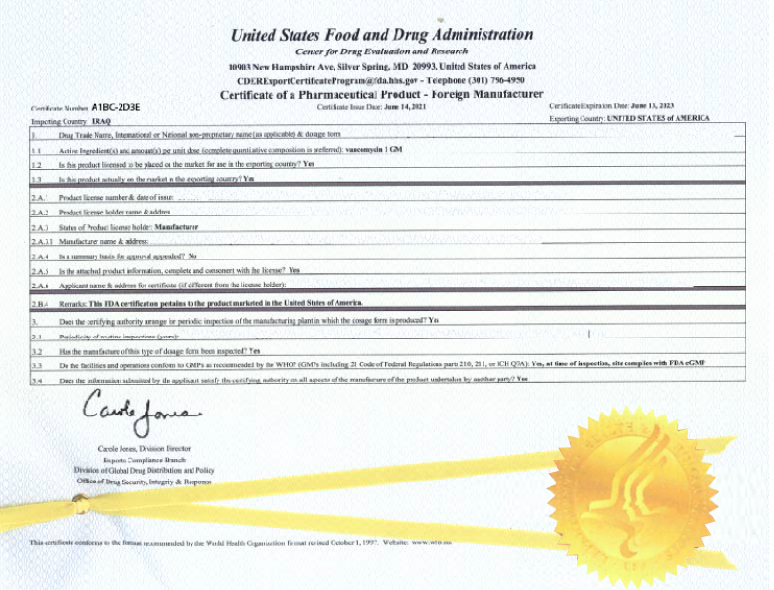
Medicines can only be sold in Uruguay once they are registered with the Ministry of Public Health (MSP), under Decree No. 18/020, which sets the rules for registering, importing and selling human medicines. Medical devices, cosmetics and hygiene products also go through MSP procedures, many of them harmonized with Uruguay's Mercosur partners. Registration files for imported products rely on official documents from the country of origin, and for U.S. products those come from the FDA.
Uruguay is a smaller market than its neighbours, but it has a reputation for regulatory stability, and many companies use it as a well-organized base for the Southern Cone. The FDA is a federal agency, so only the U.S. Department of State can apostille its certificates. We handle that step and ship the result to you or straight to your Uruguayan registration holder.
Match your product to the Uruguayan authority that reviews it and the FDA certificate that authority normally expects.
| Product type | Uruguayan authority | FDA certificate |
|---|---|---|
| Medicines | Ministry of Public Health (MSP), under Decree No. 18/020 | Certificate of a Pharmaceutical Product (CPP), Certificate of Exportability |
| Medical devices | Ministry of Public Health (MSP), following Mercosur-harmonized rules | Certificate to a Foreign Government (CFG), Certificate of Exportability |
| Food, ingredients & infant formula | MSP and local food authorities, such as the Intendencia de Montevideo | Certificate to a Foreign Government (CFG), Health Certificate |
| Dietary supplements & medical foods | Ministry of Public Health (MSP), depending on classification | Certificate of Free Sale (CFS) |
| Cosmetics & hygiene products | Ministry of Public Health (MSP), following Mercosur-harmonized rules | Certificate for Cosmetics |
The MSP leads health-product regulation in Uruguay, while food registration also involves local authorities. Your Uruguayan registration holder will confirm which body reviews your product and which FDA certificate it expects.
The Hague Apostille Convention has been in force for Uruguay since 14 October 2012, so a single apostille from the U.S. Department of State makes your FDA certificate valid there. There is no embassy visit, consular stamp or second legalization step.
Send the digital certificate exactly as the FDA issued it and choose Uruguay as the destination.
We check that the certificate is complete, FDA-signed and ready for the State Department.
We submit it to the Office of Authentications and track it until the apostille is issued.
The apostilled certificate ships to you, your importer or your agent in Montevideo or anywhere else.
Under Decree No. 18/020, a medicine must be registered with the MSP before it can be sold. Unregistered imports are allowed only in exceptional cases, such as shortages, so plan your registration and the apostilled FDA certificate well before launch.
Uruguayan authorities work in Spanish and generally ask for foreign documents to be translated by a sworn public translator (traductor público). Apostille the FDA certificate first, then translate it, so the apostille is covered.
Uruguay shares many technical rules for devices, cosmetics and hygiene products with Argentina, Brazil and Paraguay through Mercosur. Exporters often register in several Mercosur markets in sequence. All of them accept apostilles, but each authority usually wants its own original.
Registrations are held by a company established in Uruguay with a technical director responsible for the product. Make sure the manufacturer and product names on your FDA certificate match the holder's file.
| Item | Amount | Notes |
|---|---|---|
| Our service fee | $68 / doc. | Review, submission, tracking and FedEx dispatch |
| U.S. Department of State fee | $20 / doc. | Paid by us on your behalf |
| Total | $88/ doc. | Standard processing: 9 business days. Expedited options available. |
Yes. Uruguay joined by accession, and the Convention has applied there since 14 October 2012. A U.S. Department of State apostille is enough, so no Uruguayan consulate legalization is required.
The Ministry of Public Health (MSP), under Decree No. 18/020, which governs the registration, import and sale of human medicines.
Usually yes. Uruguayan authorities generally ask for a translation by a sworn public translator. Translate after the apostille is attached so both are covered.
Those countries also accept apostilles and share some Mercosur rules, but each authority normally wants its own original. Order one apostille per country.
A CPP for medicines, a CFG for medical devices and conventional foods, a Certificate of Free Sale for dietary supplements, and a Certificate for Cosmetics for cosmetic products. Products not sold in the U.S. need a Certificate of Exportability.
Standard processing takes 9 business days and costs $88per document: our $68 service fee plus the $20 U.S. Department of State fee. Expedited options are available.
Dietary supplements, medical foods and foods for special dietary use.
Medical devices, conventional foods, food additives and infant formula sold in the U.S.
The WHO-format certificate used to register human drugs.
Products made in the U.S. for export only.
Collagen and gelatin exports (EU health certificate or SRM certificate).
Skincare, makeup, haircare and fragrance products.
Upload your FDA certificate today and receive it apostilled by FedEx in 9 business days, for $88per document with the State Department fee included.
Start Your Order Ask a Question
Simply upload your FDA digital file, and you will receive your apostilled document via FedEx.